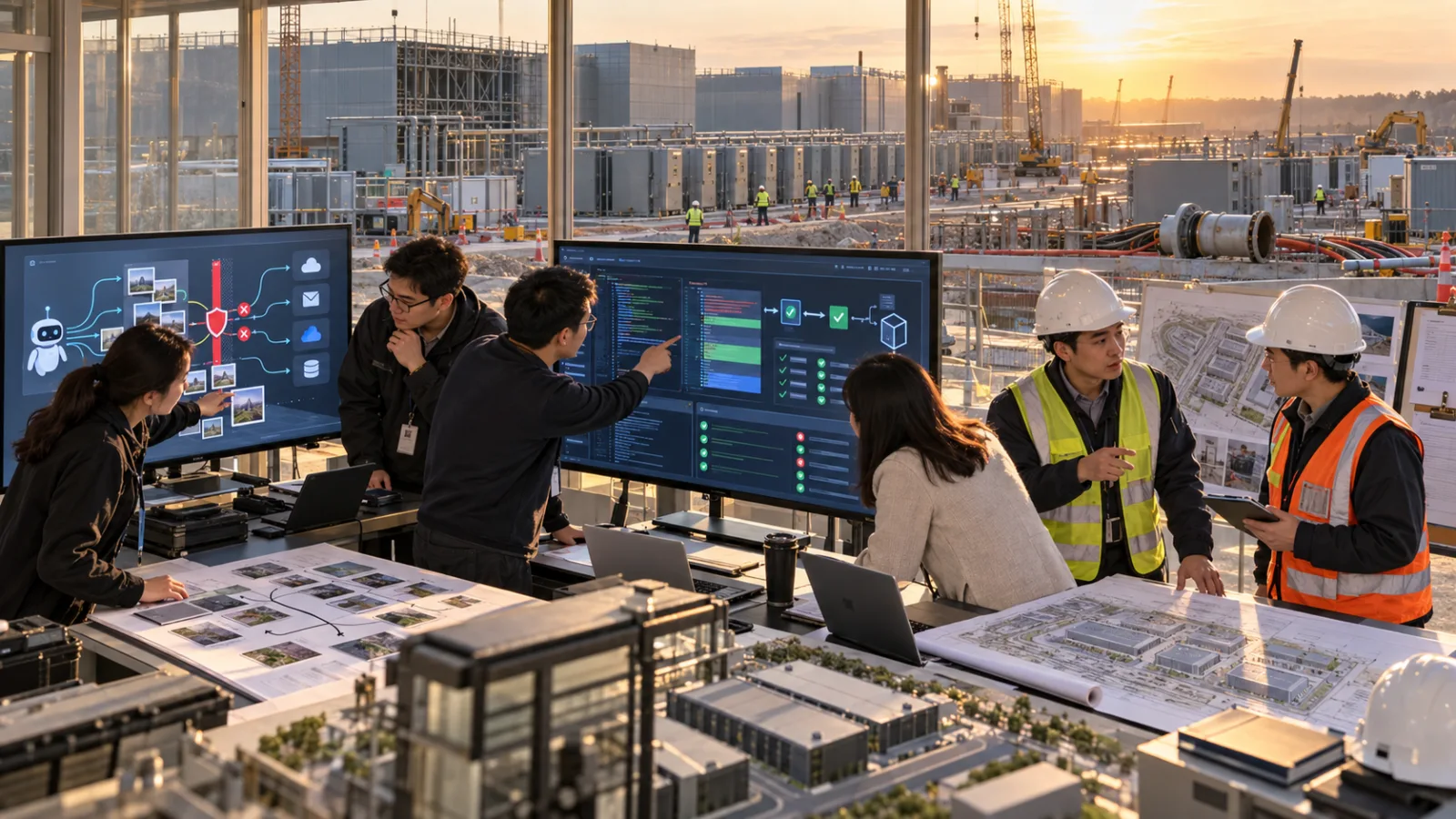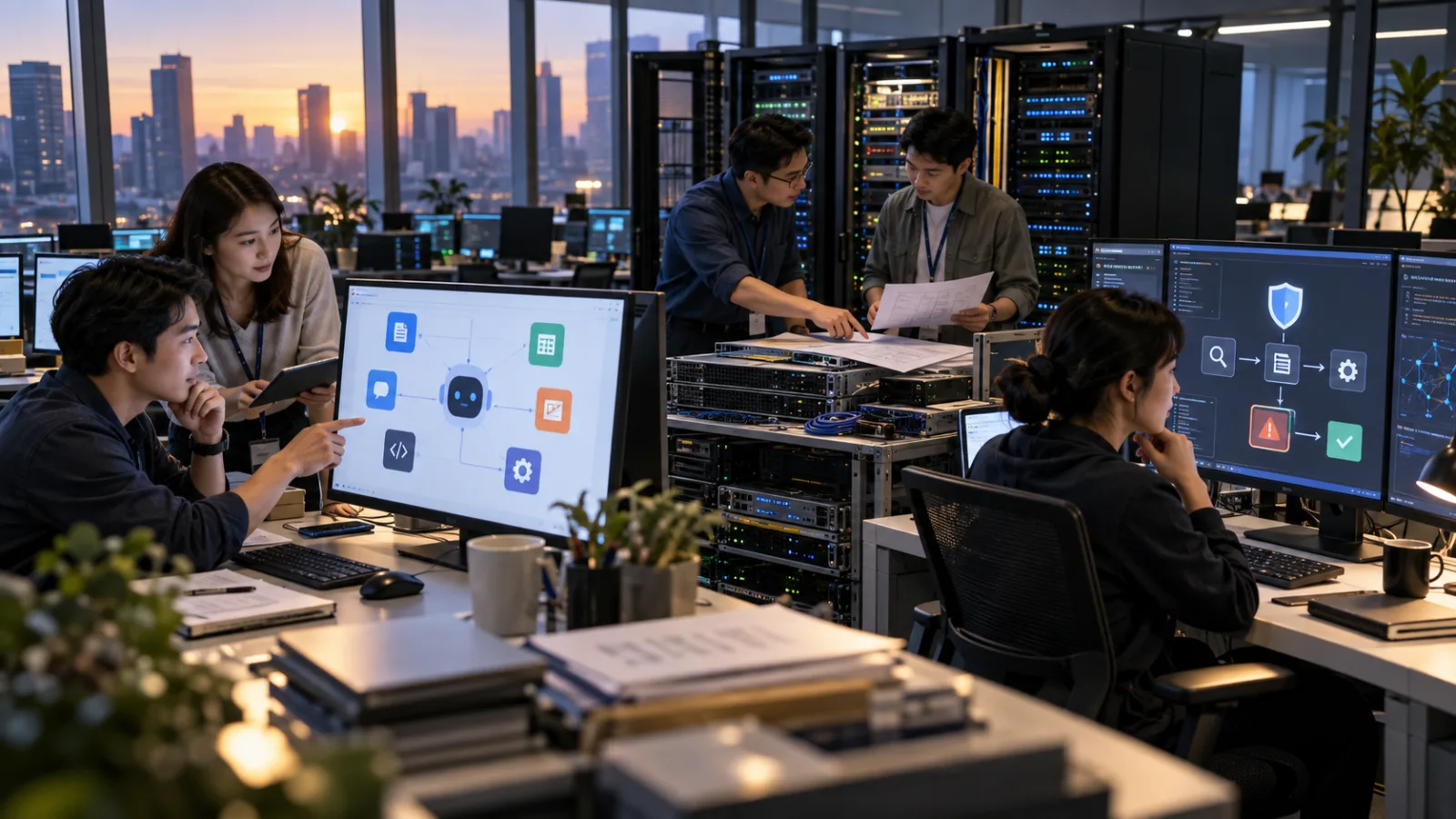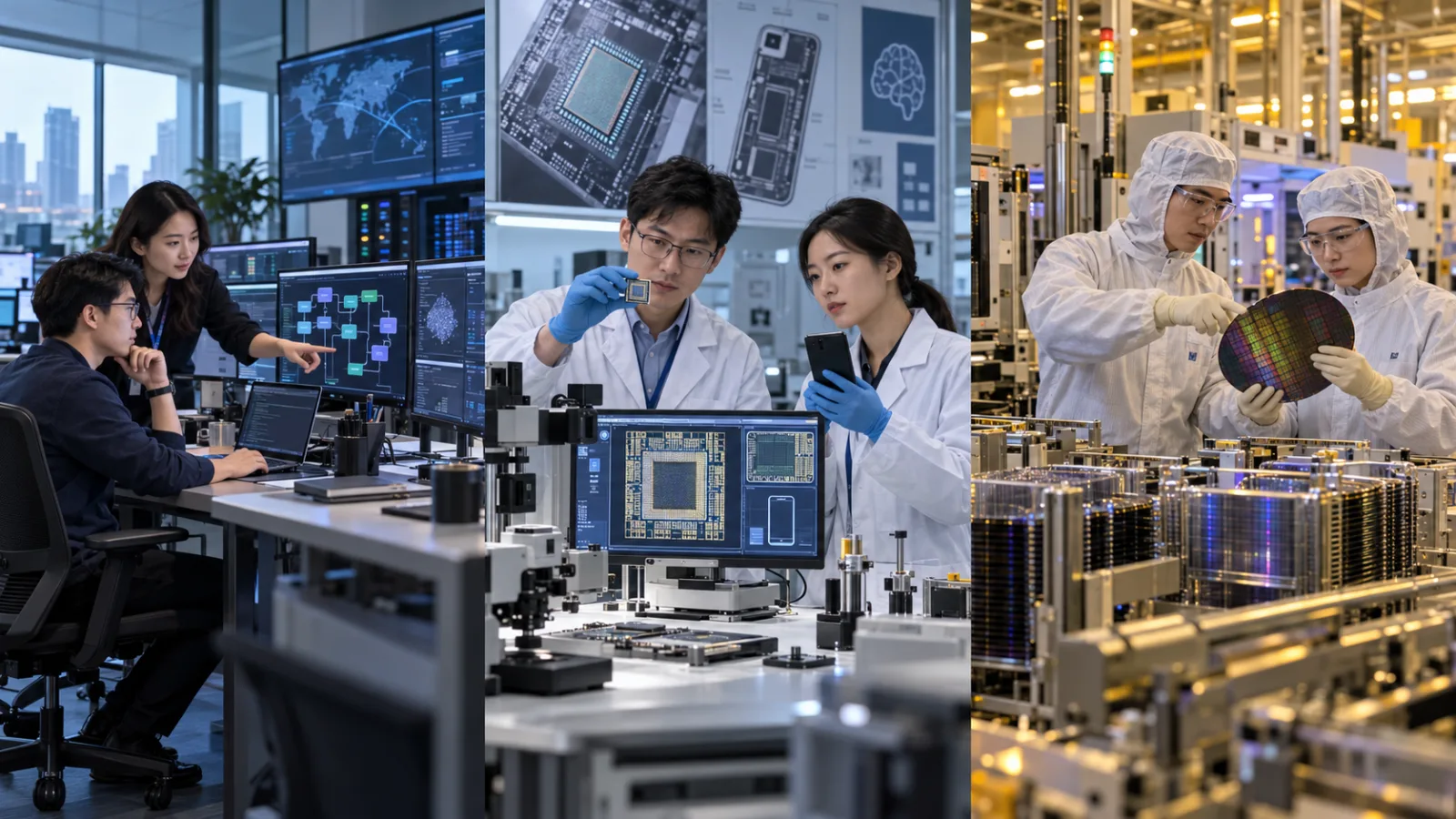
Today’s three AI news items:
The first says:
AI for coding is no longer just an assistant sitting beside one engineer.
The second says:
More complex AI is being directly integrated into mobile chips.
The third reminds us:
No matter how advanced AI chips get, people still have to manufacture the memory chips.
Putting these three together:
We see AI competition is shifting its focus.
In the past, most comparisons focused on:
Which model:
Ranks top on benchmarks?
Which chatbot:
Provides the best answers?
Which model:
Writes code the fastest?
Now, what truly determines whether AI can scale commercially is becoming:
Software Production.
Edge Computing.
Semiconductor Manufacturing.
And:
The people working behind the scenes.
First: Factory Raises $200 Million, Valued at $5 Billion
Reuters reported on September 15:
The AI coding agent startup:
Factory
Completed a new funding round of:
$200 million.
The company’s valuation:
Reached:
$5 billion.
What’s remarkable is that:
Back in April,
Factory raised $150 million
At a valuation of $1.5 billion.
In just about five months,
The valuation more than tripled.
Factory isn’t just about "completing the next line of code"
Its positioning:
Is closer to enabling enterprise engineering teams to use a set of AI agents to:
Build.
Test.
Maintain.
Software.
In other words,
Going beyond just writing code to extending through
Testing.
Maintenance.
The entire engineering lifecycle.
This is very different from the first-generation Coding Copilot
The first generation:
Was more like:
An engineer sitting in front of an IDE.
The AI helping to:
Complete code.
Explain functions.
Write tests.
Now, the direction is shifting to:
The engineer says:
This feature
Needs to be completed.
Then, multiple agents can:
Divide tasks.
Modify repositories.
Run tests.
Find issues.
And send back
Only the parts that truly require human decisions
To the engineer.
AI is no longer just a:
Typing Assistant.
It’s becoming a:
Work Executor.
Factory’s CEO even calls this a “Software Factory”
Factory co-founder Matan Grinberg said that large enterprises are moving from:
Individual Coding Agents
To:
Software Factories.
Note that:
This is Factory’s own description of the market direction,
Not the entire industry proving that all software companies will transform this way.
But the investment market
Is clearly willing to bet
On this direction.
Coding has become one of the most mature commercial use cases for generative AI
AI can:
Read repositories.
Modify multiple files.
Write tests.
Run commands.
Find bugs.
Review code.
Create pull requests.
The capability has moved from
“Helping humans write code faster”
To
“Completing engineering tasks autonomously.”
The next question enterprises naturally ask is:
If one agent can do this, can multiple agents work together?
But with more agents, the real bottleneck may shift from "writing code" to "acceptance"
Imagine:
Before,
An engineer wrote
One pull request a day.
Now,
Five coding agents:
Simultaneously modify
Different features.
The problem is no longer
Code isn’t generated fast enough.
It may now be:
Who checks?
Which change
Really meets the requirements?
Do different agents
Conflict with each other?
Do tests
Only cover their own code?
Who approves
The production deployment?
So the next phase of competition for coding agents
May not be about
Who writes fastest.
But about
Who can safely integrate large volumes of AI-generated software into formal engineering workflows.
This is also why SasaDaily has been emphasizing independent review recently
AI writing code
Is one layer.
Another AI:
Checks it.
Testing:
Is another layer.
Real merging
And deployment:
Are yet other layers.
If coding agents:
Work ten times faster,
But the review process
Remains the same,
Then the bottleneck
Just shifts from coding
To later stages.
Factory’s $5 billion valuation doesn’t prove this model will ultimately win
This also needs to be clarified.
Valuation is not revenue.
Funding is not profit.
Neither is it a productivity guarantee.
What it does show is limited:
Investors are now eager to bet on enterprise coding agents.
And capital
Is already shifting from
“AI helping engineers write code”
To
“AI participating across the entire software lifecycle.”
This direction
Is where the real focus should be today.
Second: MediaTek Brings 2nm to Mobile AI
Second news item:
Closer to Taiwan.
MediaTek
Officially launched on September 15:
Dimensity 9600 Pro.
This is MediaTek’s first mobile processor
Using TSMC’s
2nm process technology.
They also launched
Dimensity 9600M,
Built on
3nm process.
The importance of 2nm goes beyond just smaller numbers
Smartphone chips
Now simultaneously handle:
CPU.
GPU.
Camera.
Video.
Connectivity.
Gaming.
And increasingly:
AI.
But phones face a very real constraint:
Battery.
Data centers can:
Build more power infrastructure.
Add more cooling.
Phones cannot.
Their size is limited to
a handful of inches in the palm.
So,
Performance
And
Power efficiency
Must improve together.
MediaTek puts AI front and center this time
The 9600 Pro
Integrates a dedicated:
NPU
—Neural Processing Unit.
MediaTek said that compared to the previous generation,
Performance on prompt processing —
From user input to the model starting to output content —
Improved by approximately
51%.
This does not mean
All AI tasks
Run 51% faster.
Nor that
All apps
See 51% speed gains.
This is an official figure for
Specific NPU prompt processing.
What’s truly noteworthy is “AI running locally on the phone”
Previously, many generative AI models were used via:
Sending data from the phone
To the cloud,
Running the model,
And then returning the results back to the device.
Chipmakers now want
More AI tasks
Done directly on the device.
This is known as:
On-device AI.
Why do people want to move AI back to the device?
First:
Latency.
No need to send data out every time.
Wait for the cloud,
Then receive the response.
Second:
Some scenarios reduce
Cloud dependence.
Third:
Sensitive data
May stay on the device
For processing.
Fourth:
For heavy usage,
Cloud inference incurs costs.
But this doesn’t mean
All AI will become
Fully offline.
The frontier models are still too large
The most powerful large models
Require
Huge memory,
Compute,
And power.
Phones can’t
Fit a full data center inside.
The more likely future is:
Local plus cloud.
Simple tasks
Run on the device.
Sensitive or real-time tasks
Prefer device processing.
Truly complex tasks
Handled by cloud.
This is:
Hybrid AI.
Agentic AI makes this even more important
Imagine future AI on phones
Does more than just
Answer a single question.
It understands:
Screen content.
Camera input.
Voice.
Location.
App context.
Then helps you
Organize.
Search.
Make judgments.
Even work across apps.
If every step
Has to go to the cloud,
Latency, cost, and privacy
Become significant problems.
So, the deeper agents go,
Device-side intelligence
Becomes increasingly crucial.
MediaTek calls the 9600 series an Agentic AI chip
Of course,
We must distinguish that
Chip support for agentic AI doesn’t mean
That buying the phone automatically provides
A fully capable agent ready to do everything for you.
The real experience requires
Coordination of OS,
Models,
Apps,
Tools,
Permissions, and
Developers.
The chip is only
The underlying capability.
But MediaTek is now going beyond mobile AI
Reuters also pointed out:
MediaTek is rapidly expanding into
Data center custom chips.
Its first AI accelerator for a major US cloud provider
Is expected to enter mass production
In Q4 this year.
So, the same company
Makes mobile AI on one end,
And pushes into
Data center AI on the other.
This is why "Edge to Cloud" is becoming the new battleground for chip companies
AI will not only exist in
Data centers,
Nor only in
Phones.
In the future,
Laptops,
Cameras,
Cars,
Home devices,
Factories,
Robots
Will all require
AI chips
Of different sizes, power consumption,
And capabilities.
Who can dominate simultaneously
Edge
And
Cloud
Will bring ever greater value.
Third: On the other side of the AI boom, Micron Taiwan Union Still Discussing Profit Sharing
The third story is
Not about new models.
Nor new chips.
But about
People.
Reuters reported on September 15 that
Micron Technology
Taiwan union
Still retains
Possibility of
Proceeding with a strike vote.
The core dispute:
Is
Profit sharing.
The union isn’t asking for another one-time bonus
The union wants to establish a
Long-term,
Transparent,
Verifiable,
Permanent profit-sharing system.
One key demand is to allocate
15%
Of Micron’s global operating profit
To employees.
This is the union’s position,
Not an agreement currently in place.
Micron has already announced a Taiwan employee bonus
Eligible Taiwan employees
Can receive a
NT$1 million cash reward,
Prorated for those who joined later.
But the union thinks
A one-time bonus
Does not solve
Their real demand for a long-term system.
So,
The labor dispute
Is not yet resolved.
The union has set key dates for September 18 and 21
Taoyuan union representatives said that if by
September 18
And
September 21,
The company still hasn’t proposed
Concrete plans,
And employees feel the negotiations are stalling,
The union may declare talks broken,
And then
Proceed to a strike vote.
But
No official strike is underway now.
This distinction is important.
Production is not yet affected
Reuters clearly states:
Currently,
There is no strike
Nor
Production impact.
So today we cannot write:
"Micron Taiwan strike causes HBM shortage."
That is not the case.
What is actually happening is:
Labor negotiations remain unresolved and the union is preparing for strike possibilities.
Why include this in AI Daily Briefing?
Because
Taiwan is not
Just a small outpost for Micron.
Reuters points out:
Taiwan
Is an important production center for
Micron’s DRAM
And
HBM
High Bandwidth Memory
Which is
One of the most critical components for
AI servers.
An AI GPU depends on more than just the GPU itself
Model training
Requires
GPU.
The GPU
Needs
Large amounts of fast memory.
If
Compute is fast
But memory feeding can’t keep pace,
The processor
Still waits for data.
In recent years,
The AI boom
Has elevated HBM
From a relatively specialized memory product
To
One of the most critical bottlenecks
In the entire AI supply chain.
This explains why SK Hynix, Samsung, and Micron all benefit from AI’s growth
HBM
Demand
Is rising rapidly.
Memory prices
Are increasing.
Chipmakers
See profit improvements.
Capacity
Continues expanding.
But as companies earn
More profits,
The next question naturally arises:
How should the benefits from the AI boom be shared?
Micron union compares to Korean competitors
The union points to:
Samsung,
SK Hynix,
Noting those competitors
Have established
Profit-sharing mechanisms.
So they demand
Micron also set up
Long-term systems.
This means the AI boom
Is not only reshaping
Chipmaker revenue,
Capital expenditures,
And valuations,
But also
Labor negotiations.
More interestingly, the union covers a very large proportion
Reuters quotes the union as saying:
The Taoyuan and Taichung unions together
Represent about
Over 80%
Of Micron’s approximately 15,000 Taiwan employees.
So
Even without a strike yet,
This is not
A small group of workers with opinions.
The company must take this seriously.
Why would a long-term strike matter to the market?
Because memory supply
Is already tight.
AI servers
Have very strong
Demand for
DRAM
And
HBM.
If
A key production hub
Faces additional
Production disruptions,
Supply pressures
Could increase further.
But it’s important to stress here:
This is a potential risk, not a current reality.
This situation reveals an often overlooked reality in the AI supply chain
When we talk about AI,
We often think about
Sam Altman.
Jensen Huang.
Models.
GPUs.
Data centers.
But the chips
Manufactured,
Tested,
Packaged,
Maintained,
And shipped from factories,
Are still produced by
Large teams of engineers,
Technicians,
Equipment operators,
And production staff.
The AI boom
Has not removed
Human labor
From the semiconductor supply chain,
Quite the opposite,
It has made certain jobs
Even more important.
Today’s three news items actually form a complete AI production chain
At the top:
Factory
Wants AI agents
To participate in
Software production themselves.
In the middle:
MediaTek
Integrates AI compute
Directly into
2nm mobile chips.
At the base layer:
Micron
Must actually produce
Memory.
And
Each layer faces
Different bottlenecks.
The software layer’s bottleneck is “who verifies AI-generated code”
The faster coding agents get,
The more important become
Review,
Testing,
Permission,
And deployment.
The device layer’s bottleneck is "how to improve performance and power efficiency together"
The models
Are becoming more complex.
But phones
Cannot
Hold a data center.
So
2nm,
NPU,
And efficiency
Become increasingly important.
The manufacturing layer’s bottleneck isn’t just machines
It includes:
People,
Skills,
Labor relations,
Capacity,
Yield,
And supply chain.
These
Can’t be solved
Simply by
Adding another AI model.
So AI competition is becoming more like a real industry
Initially,
The most important was
Who launched
The best chatbot first.
Now,
They need to solve together
Software,
Chips,
Memory,
Manufacturing,
Power,
Security,
Human workflows,
And labor
To truly
Scale.
This is why “a 10% better model” no longer explains the entire AI world
Even if
A new benchmark-topping model
Debuts tomorrow,
If
There’s no one to review coding output,
The phone
Can’t run the model,
HBM
Is insufficient,
The data center
Runs out of power,
And factories
Experience capacity issues,
Then
The model’s capability
Still can’t
Fully become
A real product.
What’s most worth remembering today is that AI’s bottlenecks are expanding outward
Before,
The bottleneck was:
Models weren’t smart enough.
Now it might be:
Software workflows can’t keep up.
Chip power consumption isn’t low enough.
Memory production capacity isn’t enough.
Or even:
Profit sharing isn’t settled.
As technical maturity grows,
The problems
Look less and less like purely technical challenges.
So next time you see AI industry news, look one layer deeper
Don’t just ask:
"What new things can AI do now?"
Also ask:
"To enable hundreds of millions of people to use this capability daily, what is the current bottleneck in the production chain?"
Sometimes,
The answer is
Model.
Sometimes,
It’s
Chip.
Sometimes,
It’s
Electricity.
And sometimes,
The answer is simply:
People.
Today, progress a bit with AI.
Learn one AI skill a day.
Save a bit of time daily.
Improve your ability little by little every day.
SasaDaily, growing with you.