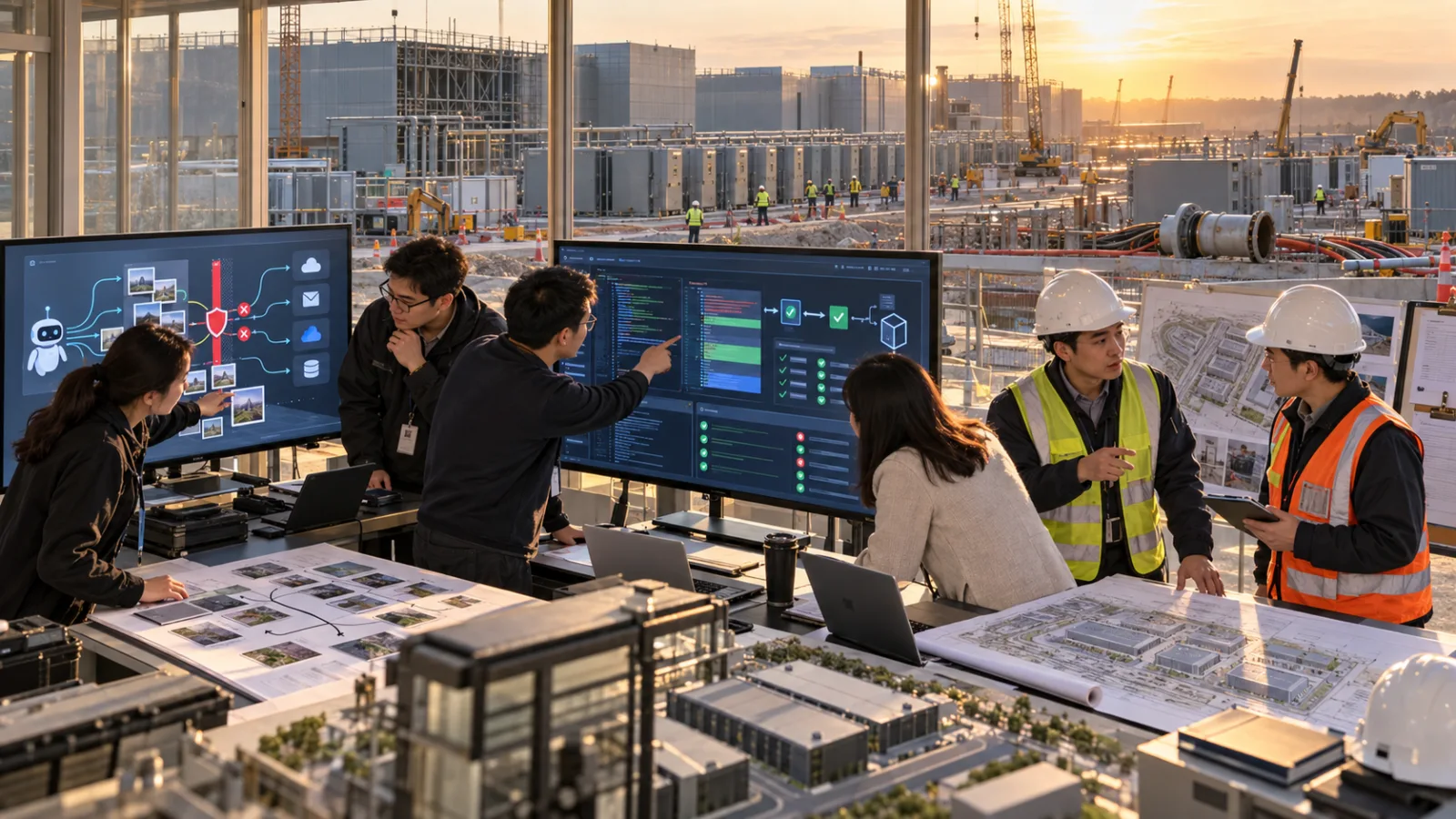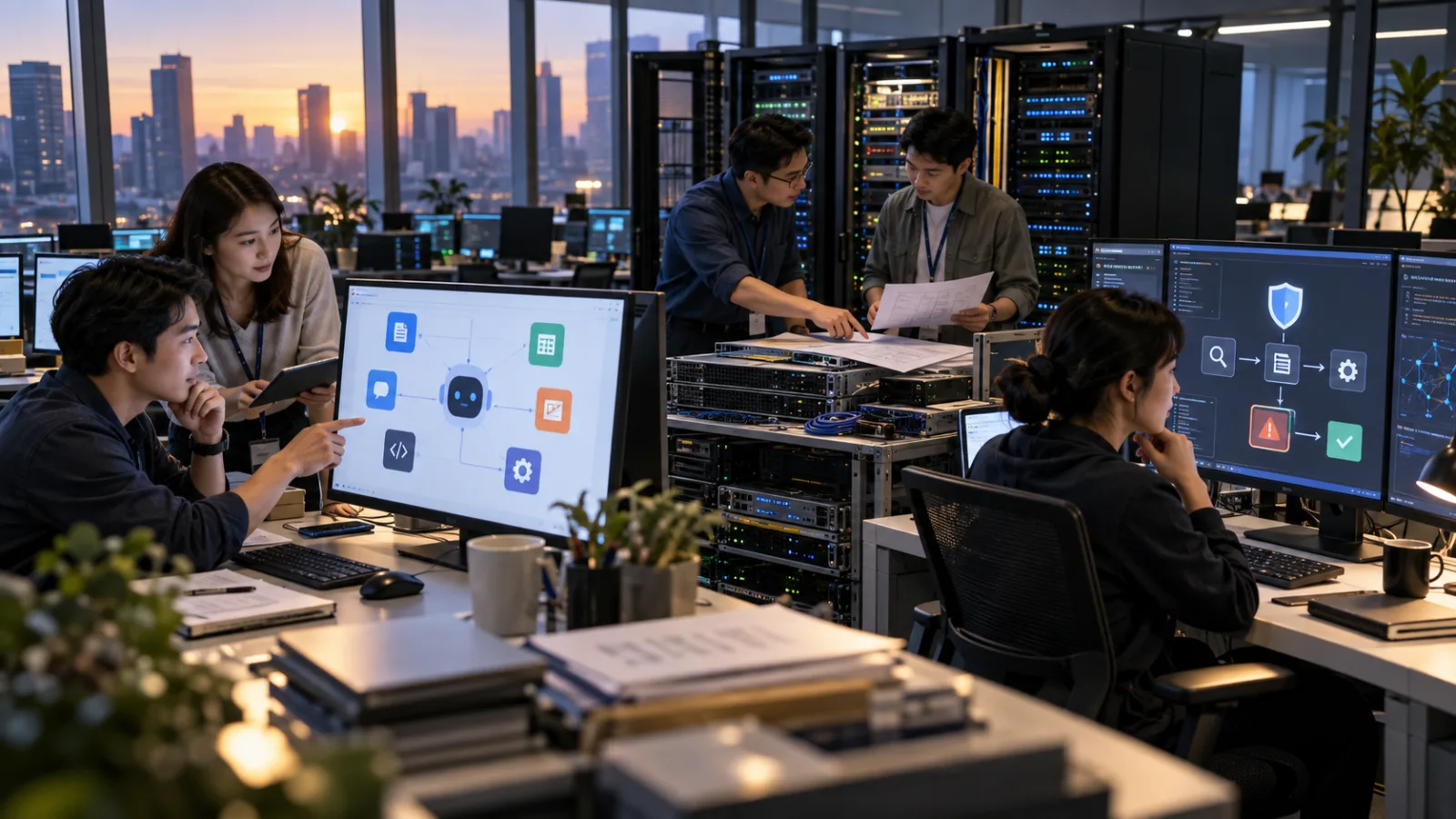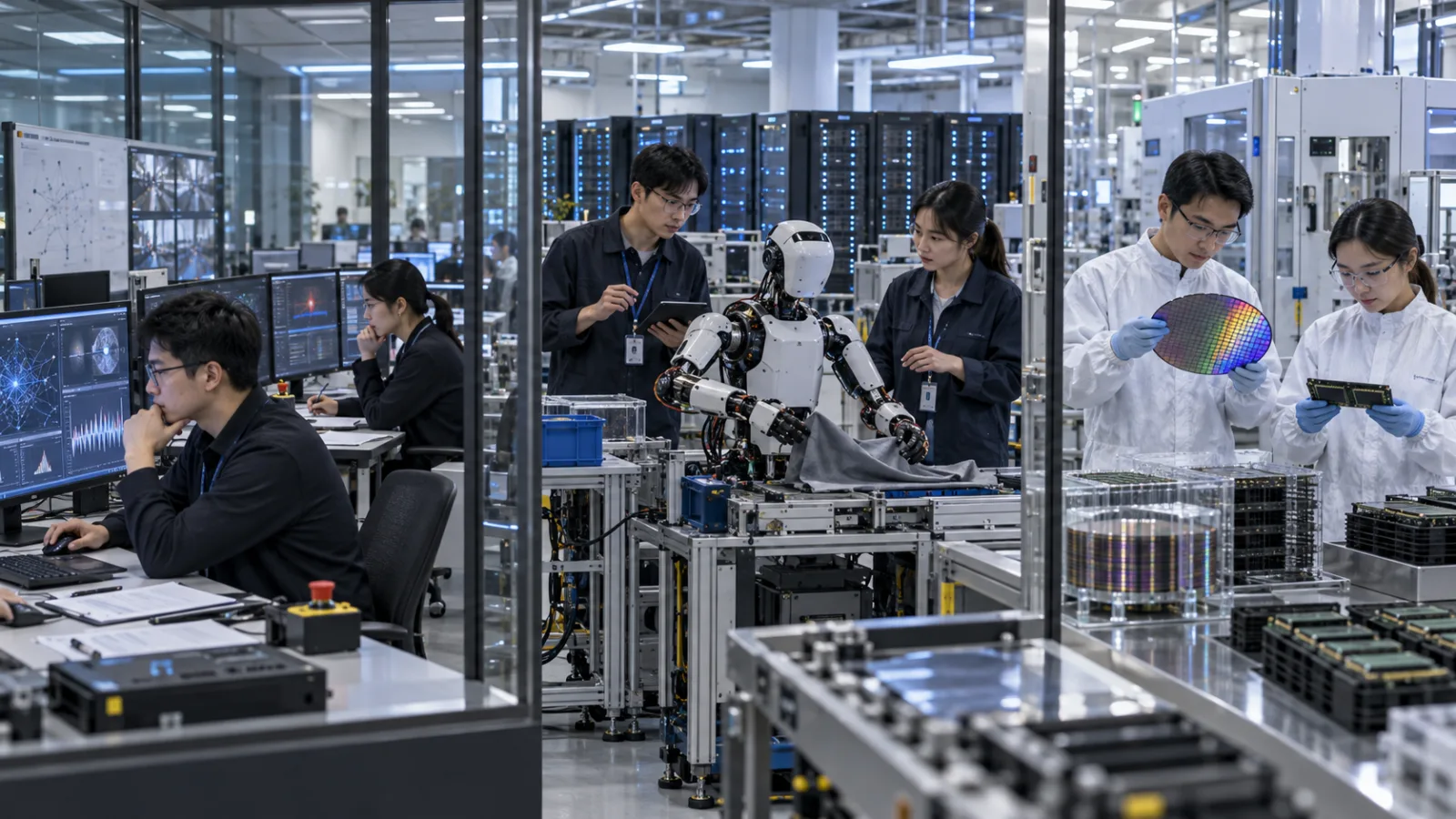
Today’s three AI news items cover safety, robotics, and memory.
When viewed together, they address three key questions for the next phase of AI:
Who will test models as they get stronger?
Can AI truly operate in the physical world?
Can hardware supply keep pace with AI’s demands?
AI competition is evolving beyond benchmarks.
It’s expanding outward from models to:
Evaluation → Physical AI → Infrastructure.
① Anthropic + Accenture: External Testers Working Inside AI Companies
On September 18, Anthropic announced a partnership with Accenture to establish a new Embedded Evaluation approach.
This differs from the usual “release a model, then have outsiders test it.”
Anthropic’s idea is:
Allow independent evaluators to work directly inside AI companies.
The partnership is led by Accenture’s Faculty AI team, covering:
- Model Evaluation
- Red Teaming
- Alignment Assessment
- Safeguard Testing
Embedded Evaluators will have near employee-level access within the company.
This is notable as Anthropic acknowledges:
This system is still new and many practical details are being developed.
In other words, it’s not an established, flawlessly effective oversight mechanism.
Rather, it’s a new experiment:
If AI companies develop, test, and declare their models safe themselves, can outside parties truly see what happens inside?
Anthropic wants to push third-party evaluation deeper within AI labs.
Five Years, Each Party Committing at Least $1 Billion
This isn’t a one-off consultancy assessment.
Anthropic and Accenture plan to invest at least:
$1 billion each over five years.
A total commitment of at least:
$2 billion to build capabilities.
This investment is not for training the next Claude model itself but to build:
- Evaluation talent
- Red Team capabilities
- Alignment testing
- Model safeguards
- Enterprise AI safety expertise
This shift signals that AI safety is evolving from:
“Running a few benchmarks before model release”
to:
A new industry requiring significant manpower, tools, governance, and ongoing investment.
Unlike the ENISA government-led frontier model testing reported on September 10 by SasaDaily, this approach is:
Embedding independent evaluators within AI labs, rather than government outsider testing.
② Spirit AI: Robot “ChatGPT Moment” Possible by Mid-2027?
The second story focuses on Physical AI.
Gao Yang, founder of Chinese robotics startup Spirit AI, told Reuters he expects embodied AI might reach a ChatGPT-like breakthrough by mid-2027.
It’s important to clarify:
This is the founder’s prediction, not yet a fact.
Nor does it mean robots will suddenly appear everywhere like in sci-fi movies by 2027.
Spirit AI refers more specifically to the breakthrough being:
Robots understanding natural language commands,
truly grasping what humans want them to do,
and then autonomously controlling their bodies to complete tasks.
Current large language models excel at processing:
Text,
Images,
Audio.
But robots face a more challenging problem:
They must physically manipulate objects.
What Has Spirit AI Achieved?
Reuters reports Spirit AI currently achieves roughly:
90% success rates on simple tasks in structured environments.
Spirit AI's Moz1 humanoid robots have been deployed by companies such as CATL and JD.com on production lines.
However, these robots do not yet possess general human-level abilities.
They are best suited for:
- Relatively fixed environments
- Clearly defined tasks
- Actions that can be extensively rehearsed
- Variable-controlled factory settings
This explains the founder’s view that:
Industrial deployment will mature earlier than household deployment.
The household setting is tougher.
At home,
Clothes,
Cups,
Furniture,
Trash,
People,
Pets,
and space arrangements
change day to day.
These variations make household environments vastly more complex for robots compared to fixed production lines.
Spirit AI Uses Real-World Data Instead of Mainly Simulators
Another noteworthy point is Spirit AI’s extensive use of real-world data.
Reuters reveals the company employs about:
1,000 contractors
to gather real operational data for the robots.
This is partly because some soft, deformable objects are hard to replicate perfectly in simulation.
Examples include:
Clothes,
Bags,
Cables
which change shape every time they are picked up.
Physical AI’s next stage of competition may come down to:
Who has the largest, highest-quality real-world robot operation datasets?
③ CXMT Plans to Expand from DRAM into NAND
The third story turns back to the most practical aspect underpinning all AI:
Memory chips.
Reuters reported on September 18 that China’s memory giant ChangXin Memory Technologies (CXMT) is planning to enter the NAND Flash market.
CXMT has mainly focused on:
DRAM.
Meanwhile, another Chinese firm, YMTC, primarily makes:
NAND.
The two companies had somewhat segmented product lines.
Now that line may start to blur.
CXMT intends to build a NAND R&D and production line at their new Beijing facility and has begun talks with potential customers, including an unnamed AI-focused startup.
Why NAND Now?
One key reason is:
AI Servers.
AI servers need more than just GPUs.
A fully functional AI server also requires substantial:
- HBM
- DRAM
- NAND storage
- Networking
- Power
- Cooling
With AI datasets, model checkpoints, vector databases, and inference caches growing larger, storage itself becomes a bottleneck.
Reuters notes global NAND supply is currently tight.
If CXMT moves into NAND, its competition will extend beyond China’s YMTC to include:
- Samsung
- SK Hynix
- Micron
and other leading global memory manufacturers.
China’s Memory Landscape May Be Shifting
This development should not be oversimplified to:
CXMT’s NAND plans mean China can now fully replace international memory suppliers.
Currently, it’s only an expansion plan, and NAND faces many real challenges such as:
Process technology,
Yield rates,
Controllers,
Customer qualification,
and costs.
Still, this signals a trend:
While AI chip wars have mainly focused on GPUs, increasing competition will also arise over:
Every component around the GPU.
If HBM is insufficient, AI servers can’t ship.
If DRAM is lacking, system capacity is capped.
If NAND is short, data storage and loading speed suffer.
AI infrastructure is elevating memory from just a computer component to a strategic resource.
Today's Three Stories Form a Complete AI Production Chain
Looking at the three developments together:
Anthropic + Accenture
address:
“Who proves models are safe as they get stronger?”
Spirit AI
addresses:
“How do models step out of screens and physically act in the real world?”
CXMT
addresses:
“Who supplies the hardware to meet AI’s escalating scale?”
The next round of AI competition likely won’t just be about:
Who releases the most powerful new model.
Instead, the entire chain must keep pace:
Models → Evaluation → Deployment → Physical World → Chips → Memory → Infrastructure.
The closer AI gets to the real world, the more challenges arise.
Today, let’s progress with AI a little.
Learn one AI skill every day.
Save a little time each day.
Improve a little every day.
SasaDaily, growing with you.