If you only glance at today’s Alibaba headlines,
you might think:
China has launched another AI chip.
But what’s truly noteworthy
isn’t just the Zhenwu V900 itself.
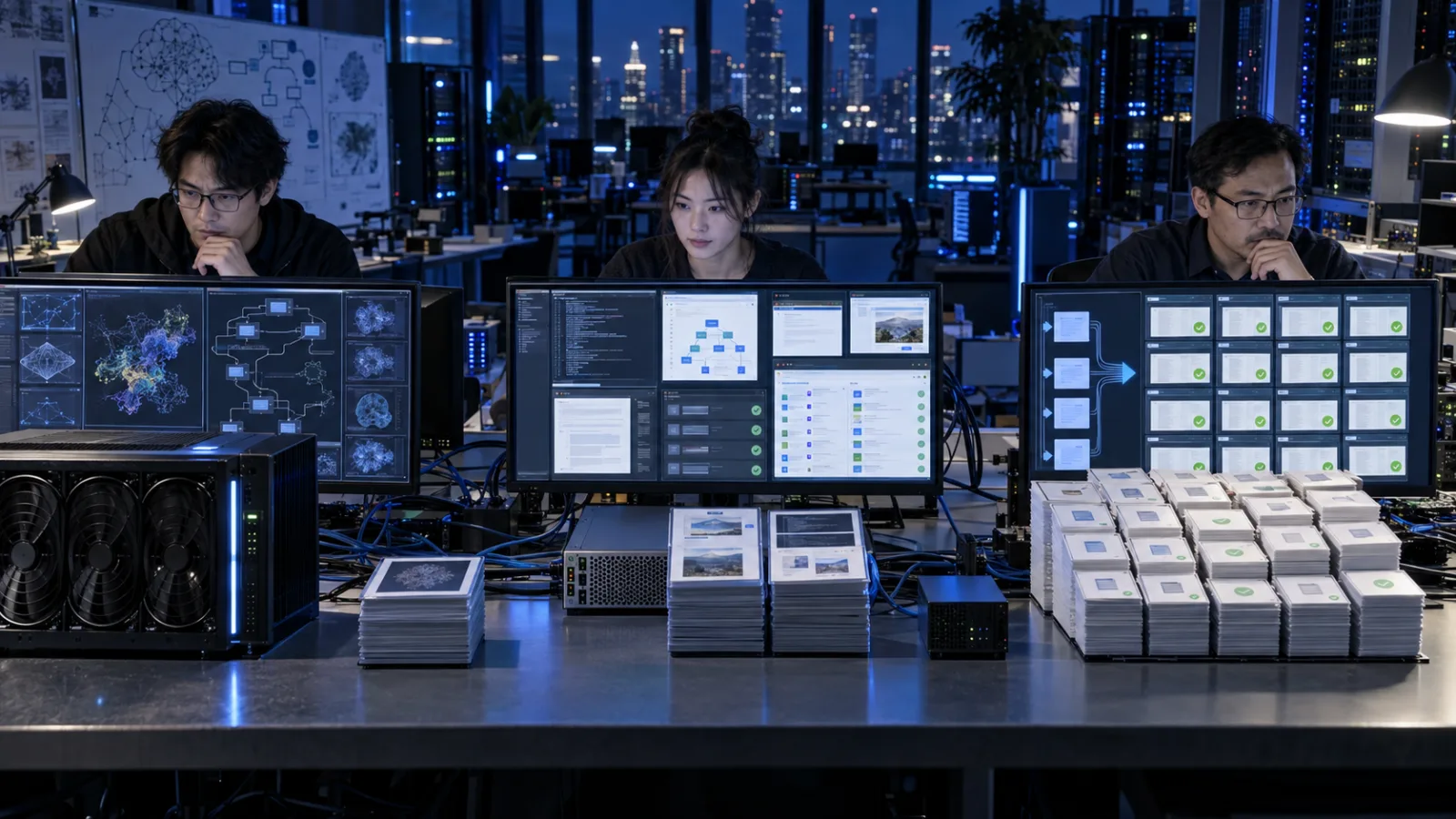
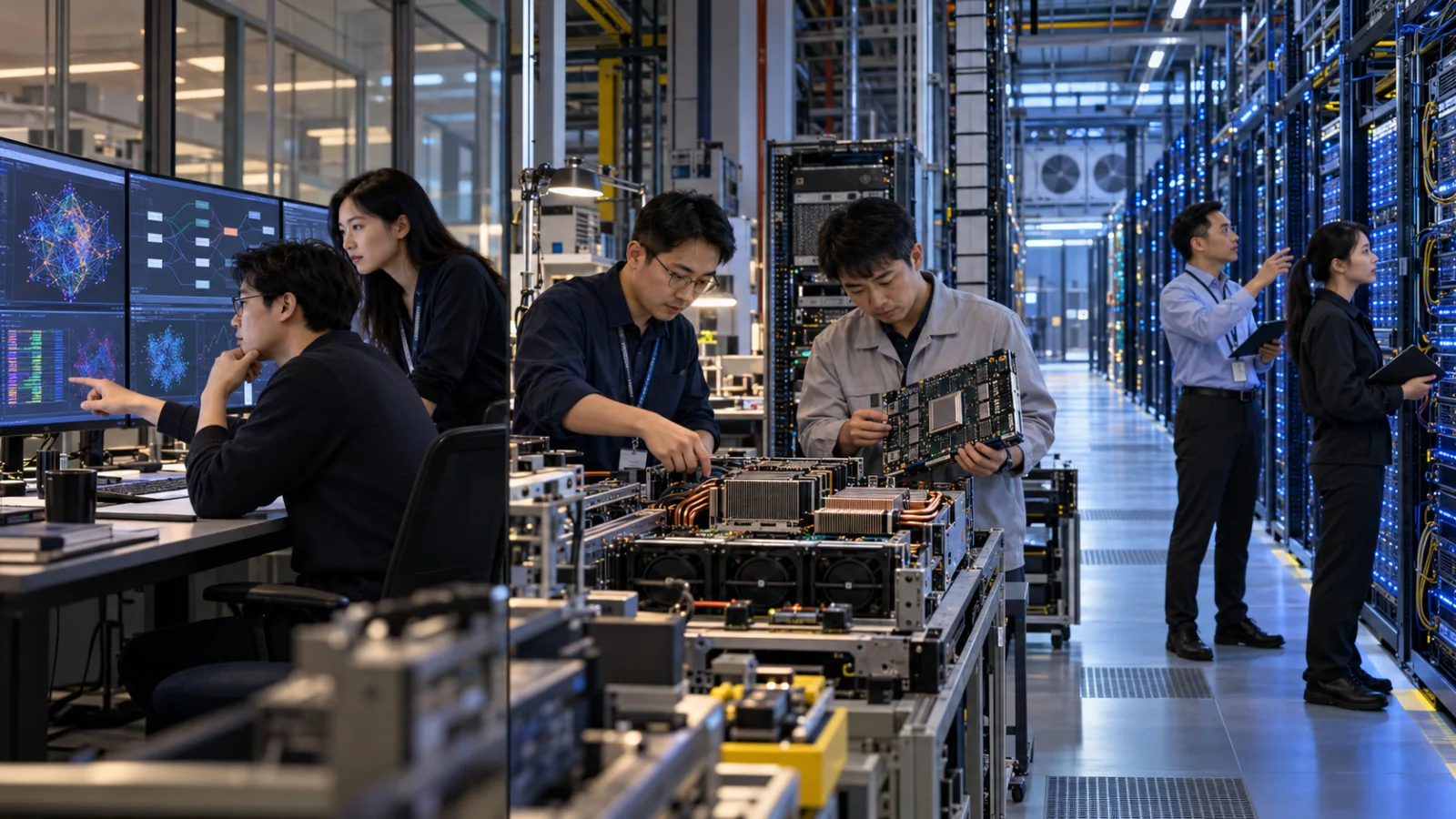
What Alibaba did today was to present all of the following:
Models.
Chips.
Servers.
Networks.
Storage.
Data centers.
On one unified AI roadmap.
This means that the competition among large AI companies in China
is no longer just about:
Who has the higher benchmark model.
It’s about:
Who can build and maintain the entire AI stack independently.
Alibaba’s next-gen Qwen to scale up to 5-10 trillion parameters
Today at the Apsara Conference in Hangzhou, Alibaba CEO Eddie Wu shared that the Qwen team continues to research:
Model architecture,
Data optimization,
and tackling more complex, longer-horizon AI tasks.
Currently, Qwen 4 is in training.
Future versions, Qwen 4.5 and Qwen 5, are expected to scale up to 5 to 10 trillion parameters.
The current flagship, Qwen 3.8 Max, has about 2.4 trillion parameters.
In other words, future models could be roughly 2 to 4 times larger than today’s.
Parameter count doesn’t equal intelligence
It’s important to clarify.
Parameter count is a measure of model size,
not a direct measure of capability.
Actual abilities depend on:
Architecture,
Training data,
Post-training,
Inference strategy,
Tool usage,
Context,
Compute efficiency,
and other factors.
So while 10 trillion parameters is impressive, it doesn’t translate directly into “four times the capability.”
The true test will come when the models are released, to evaluate:
Reasoning,
Coding,
Agentic tasks,
Cost,
Speed,
and real-world performance.
Alibaba’s real focus: long-term tasks
Wu highlighted the goal of addressing:
More complex, longer-horizon tasks.
This means AI is not limited to answering a single question,
but can:
Plan over extended time frames,
Test itself,
Detect errors,
Refine,
and continue working.
This aligns with the growing agentic AI trend.
The real commercial value may not be in AI that responds more human-like day-to-day,
but in AI that can sustain continuous work over hours or days while maintaining its mission.
Alibaba showcases Recursive Self-Improvement (RSI)
One intriguing experiment shared involved:
RSI — Recursive Self-Improvement.
The concept: the model autonomously identifies its weaknesses, designs experiments, generates new training data, diagnoses errors, and optimizes itself iteratively.
Alibaba reports that Qwen 3.8 Max completed 33 iterative cycles over more than a month in an automated process, improving its Artificial Analysis Score from 40 to 45.
These results are from Alibaba’s internal experiments, not third-party validation, but the direction is important.
AI applied to chip design
Another fascinating experiment involved AI in chip design tasks.
The model performed over 60 continuous hours of self-improvement, invoking EDA tools more than 10,000 times, culminating in production-grade chip bus modules.
Alibaba claims a 42% reduction in chip area without sacrificing performance.
Again, these are internal results and don’t imply AI can fully design advanced chips solo yet.
But this points to a future where AI compute isn’t just used for chatting, image generation, and coding,
but also to dedicate massive compute resources to designing next-gen AI hardware.
So how to run such huge models?
This brings us to today’s second major point.
Alibaba introduced the Zhenwu V900, developed by its chip design unit T-Head.
It supports both AI training and inference.
Alibaba claims it’s the most powerful AI chip in China to date.
However, no comprehensive third-party benchmarks currently confirm it outperforms all competitors in every workload.
More precisely, Alibaba claims it as China’s strongest AI accelerator now.
Performance claimed to be triple that of M890
Its predecessor, Zhenwu M890, launched in May this year.
The V900 is said to deliver 3 times the performance of the previous generation.
Official specs include 216GB memory and 1,200GB/s inter-chip bandwidth.
It supports various precisions like FP8 and FP4.
The design goal is clear: to run high-precision training while reducing inference costs.
Because as large models see widespread use, the biggest cost isn’t just initial training,
but ongoing inference every day for every user, every agent execution.
One chip isn’t enough — Alibaba plans 500,000-card cluster
Today’s key number is 500,000.
Alibaba says its Supernode infrastructure based on Zhenwu V900 can scale up to about 500,000 AI accelerator cards in a cluster.
This isn’t about “how many GPUs per server,”
but whether hundreds of thousands of computing units can collaborate as one massive supercomputer.
At scale of 5 to 10 trillion parameters, challenges go beyond chip performance to include:
Networking, memory, storage, failure recovery, power, cooling, and software scheduling.
Alibaba even develops networking cards and SSD controllers
Today’s Supernode incorporates not only Zhenwu V900 chips, but also:
ICN Switches, Panmai SmartNICs, and Zhenyue SSD Controllers.
In other words, Alibaba is following a path similar to Nvidia’s recent strategy:
don’t just sell an accelerator chip,
but build an entire system encompassing compute, network, storage, server, and software as one integrated package.
As AI clusters grow larger, data transfer bottlenecks can throttle performance even with fast individual components.
Why is everyone talking about “Supernodes” now?
Before, AI chip competition was about a few percentage points faster per card.
Now, frontier models require immense compute, making a single card insignificant.
The real question becomes:
How to make 100,000 or even 500,000 cards work together efficiently.
Any bottleneck in network latency, memory bandwidth, or chip-to-chip communication reduces entire cluster efficiency.
So today’s announcements from Alibaba and Huawei reflect a shift:
The AI battlefield is moving from individual chips to entire superclusters.
V900 mass production planned for early 2027
Alibaba targets Q1 2027 for mass production and commercial release of the Zhenwu V900.
Today’s launch is a roadmap and product announcement, not yet large-scale deployment.
Key points to watch will be production yield, supply volume, memory sourcing, packaging capacity, and real cluster scaling efficiency.
These factors will determine if Zhenwu can truly become a large-scale alternative to Nvidia.
Over 650 customers already using Zhenwu chips
Alibaba reports its existing Zhenwu AI chips serve over 650 customers across industries including automotive, finance, large language models, embodied intelligence, energy, and manufacturing.
However, having 650 customers doesn’t mean all deploy at scale or indicate market share.
Future shipment, revenue, utilization, and deployment growth are the metrics to watch.
The bigger number: 20GW data center capacity
Beyond the 10 trillion parameter model, another headline number is 20GW.
Wu states Alibaba Cloud aims to operate over 20 gigawatts of data center capacity worldwide by 2032.
This figure refers to the energy capacity of data centers, not model speed, FLOPS, or current capacity.
It is a long-term target.
Why build such massive compute?
The reason is straightforward:
AI demand will far outpace current supply.
Wu describes AI customer demand as exceptionally robust, with mid- to long-term demand exceeding current supply capabilities.
The core challenge is no longer “will customers adopt AI?”
but “do you have enough compute power for them?”
This is a common challenge across global AI companies as model demands expand.
The bottleneck becomes chip, power, data center, networking, and cooling capacity—not prompts.
Alibaba Cloud aims to commercialize AI Supernodes this quarter
According to Reuters, Wu says Alibaba Cloud will bring AI Supernodes to commercial scale within this quarter.
This is even more immediate than the 2032 20GW target.
Supernode commercialization means accepting customer testing now,
raising questions of performance, pricing competitiveness, stability running large Qwen models, and enterprise willingness to pay.
Why does Alibaba build its own chips?
This also boils down to one key factor:
Nvidia.
Reuters points out Chinese tech companies are accelerating development of domestic alternatives
to reduce reliance on Nvidia AI processors.
This is partly driven by tightening US export restrictions on advanced AI chips.
If Alibaba models run on proprietary chips, the cloud operates independently,
but underlying high-end compute always depends on US chips,
then supply chain risk remains.
Zhenwu V900 symbolizes more than “Alibaba wants to be a chip company.”
It reflects how AI autonomy ultimately reaches down to silicon.
Similar direction to Huawei
On September 17, SasaDaily reported Huawei’s AI compute shortage leading to bringing forward Ascend 960DT by 9 months, shifting competition towards large supernodes.
Today, Alibaba is doing the same:
Zhenwu chips, Supernodes, 500,000-card clusters, and 20GW cloud capacity.
This suggests Chinese AI infrastructure is converging on a common path:
Model companies moving toward hardware, hardware companies moving toward integrated systems,
with the ultimate competition centered on full AI factories.
Nvidia’s strength goes beyond GPUs
This is why producing a Chinese chip close to Nvidia’s isn’t enough.
Nvidia’s long-term advantage includes:
Cuda, libraries, networking, NVLink, InfiniBand, system integration, developer ecosystem, cloud partnerships.
If Alibaba truly wants to reduce Nvidia dependence,
V900 alone won’t suffice.
They need to enable model, compiler, network, storage, cloud, and agent platform to all work together seamlessly.
Today’s Apsara Conference showcased this holistic direction.
Alibaba builds Agent Cloud platform
Alibaba also unveiled AgentCore, an enterprise platform for building, executing, and managing AI agents.
Alongside this are the Agent Security Center, Agent Context, and a new Context Engine.
This forms part of Alibaba’s full-stack roadmap, roughly lining up as:
Qwen model → Agent platform → Cloud software → Networking → Storage → Supernode → Zhenwu AI chip → Data center.
A very long vertical stack.
A practical advantage: self-optimization
If the model team and chip team belong to separate companies, cooperation relies on public interfaces.
By controlling the entire stack—Qwen, compiler, chip, network, storage, cloud—Alibaba can optimize holistically:
Which precision to use in models,
Memory placement,
Token caching strategies,
Reducing network wait times,
Lowering inference costs.
This full-stack optimization is about combined efficiency, not necessarily each layer being the best.
Full-stack approach is costly and risky
On the flip side, this is capital intensive,
with huge investment at every level: model, chip, server, network, cloud, data center.
If any layer fails, it drags down the whole system.
For example:
Model looks great, but chip yields are poor.
Chip is fast, but network scaling is poor.
Many data centers built, but customer demand lags.
These become expensive problems.
The true test of a full-stack strategy is not in announcements,
but whether these layers can collectively generate revenue.
Market reacts positively today
Reuters reports Alibaba’s Hong Kong shares rose 5.1% today, reaching about a one-month high.
This suggests the market views Alibaba’s shift from “just burning capex”
to a full-stack strategy integrating model, chip, cloud, data center, as promising.
However, a single day’s stock move doesn’t guarantee Zhenwu’s success.
The real proof will be in deployments and business results.
The real takeaway isn’t 10 trillion parameters
10 trillion parameters grab attention.
500,000 cards are eye-catching.
20GW even bigger.
But Alibaba’s real message is:
The next AI battle won’t be about isolated products.
Where once the questions were:
Who has the strongest model?
Who has the fastest GPU?
Who has the biggest cloud?
Now these must be considered together,
because large AI requires models that know how to run, chips that can handle it, networks that move data, storage that keeps pace, power for data centers, and cloud sales.
Only then do you get truly usable AI services.
China’s next AI phase may look like an all-industry competition
The last few days saw Huawei’s announcements, today Alibaba’s.
Future may bring other cloud providers, chip companies, and model labs expanding into each other’s domains.
When models grow to trillion-parameters, agents run for tens of hours, clusters scale to hundreds of thousands of cards,
the real bottleneck isn’t a single layer.
Alibaba today hasn’t only announced:
Bigger Qwen models
or
Faster Zhenwu chips.
It’s signaling it wants to build a complete AI factory.
The real focus going forward is not how many trillions can be announced at future launches,
but whether this factory can produce reliably, stably, affordably, and with customers willing to pay continually.
Today, grow a little with AI.
Learn one AI skill every day.
Save a bit of time each day.
Improve a little every day.
SasaDaily, growing together with you.