One common misconception about AI videos is:
Once a model can generate:
10-minute videos,
the problem of long video production is solved.
But anyone who's worked with videos knows,
length is only the first hurdle.
The real challenges are:
Is the person in the first scene
still the same in the fifteenth scene?
Do the clothes suddenly change?
Has the scene orientation shifted?
Are camera angles just repeating?
If a scene isn't satisfactory,
can you just redo that scene?
Or do you have to reshoot the entire video?
Higgsfield’s latest case study
makes these issues very clear.
Higgsfield: Previously capped at about 1 minute, now exceeding 10 minutes
On October 13, OpenAI released a customer case featuring Higgsfield.
Higgsfield CEO and co-founder Alex Mashrabov said,
before adopting GPT-6 Astra,
their AI-generated videos
would max out at around 1 minute.
Now, they can produce videos
longer than 10 minutes.
Looking at the numbers alone,
it’s easy to think:
"GPT-6 Astra now generates 10-minute videos in one go."
But that’s not what this case actually describes.
What’s truly noteworthy is:
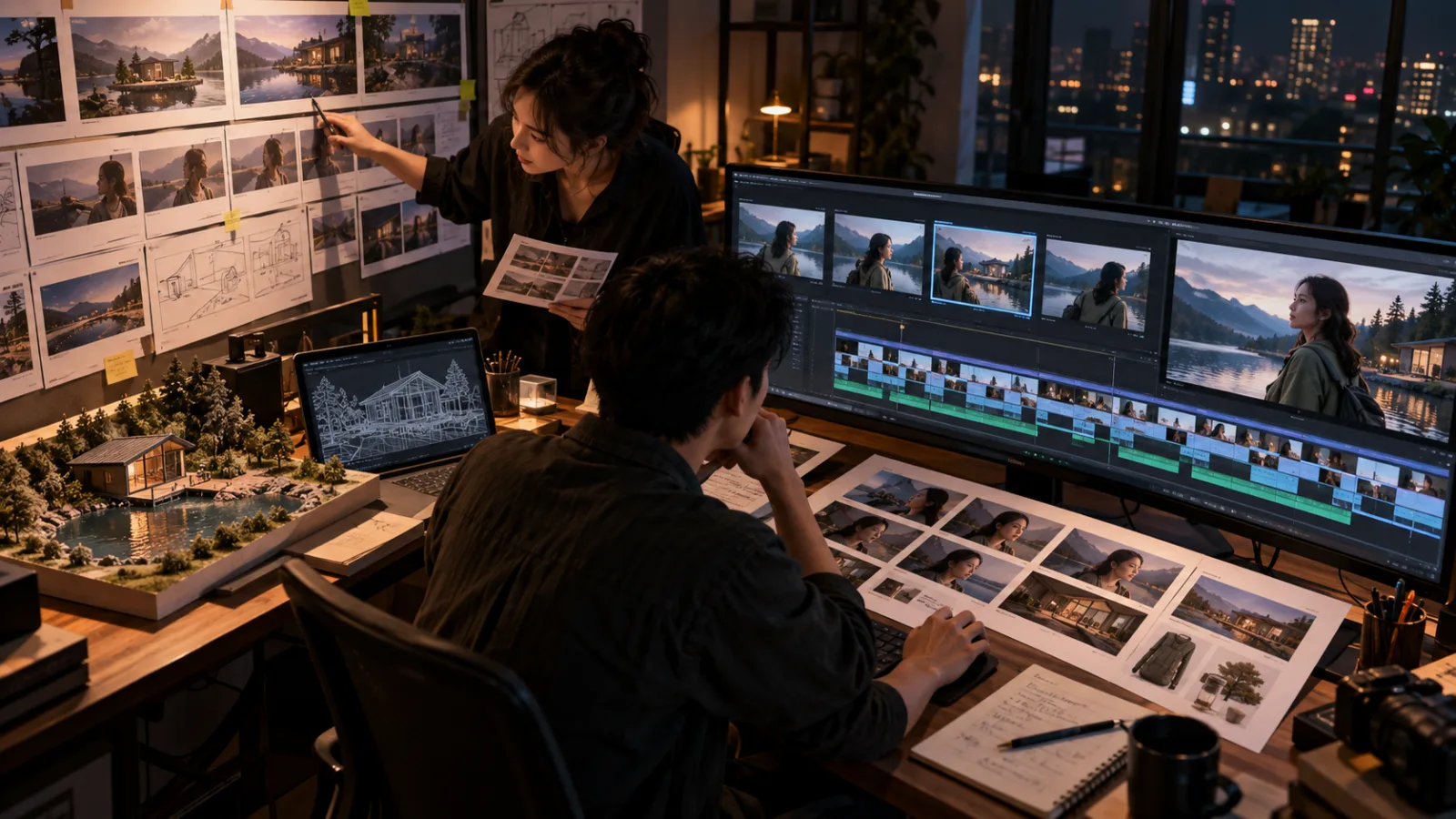
they broke down production into workflows.
First layer: Avoid repeatedly creating "the same shot again"
The most common task in commercial videos is not:
starting from zero and imagining a new world.
It’s:
"Make this scene a bit closer."
"Create another angle of the same action."
"Same character, but camera shifts left."
"Give me three versions of this shot."
These tasks are important,
but highly repetitive.
Higgsfield explains
that their Creative Agents
take over these kinds of
Shot Variations.
Meaning:
multiple selectable versions from the same creative direction.
This division of labor is critical.
AI doesn’t have to decide
which shot is best;
it can first handle
creating many variants,
and humans then select.
This approach is completely different from "one prompt generates the entire video"
If a video has
20 shots,
and each scene requires
4 versions,
that’s
80 candidates.
If humans have to,
rewrite prompts,
reset settings,
and reorganize each time,
it doesn’t make creation much easier.
It’s just swapping
editing software operations
for
continuous interaction with AI.
The real value lies in:
packaging
repetitive but defined tasks
into workflows.
For example:
same person,
same product,
and same scene
remain unchanged.
Only the:
camera angle,
movement,
and framing
change.
These tasks are ideal for bulk handling by Agents.
Second layer: Don’t force one model to handle all tasks it isn’t good at
Another detail shared by Higgsfield
is even more valuable for commercial teams.
GPT-6 Astra can
call external tools.
Higgsfield said this allows handling
complex 3D modeling work
that previously required human intervention.
This reveals an important production concept:
Future AI videos won’t necessarily be
one all-encompassing video model.
More likely, an Agent
judges what a scene needs at that moment.
If an image must be generated,
call a video model.
If a precise picture is required,
call an image model.
If 3D work is needed,
call a 3D tool.
If coding adjustments are necessary,
call a coding tool.
AI’s true role is:
orchestration,
not pretending
to be perfect at everything itself.
Third layer: The real enemy of long videos is consistency
In short videos,
characters might occasionally have,
a slightly changed hairstyle,
clothing details going off,
or background objects shifting places.
Sometimes viewers don’t even notice before the video ends.
But when videos extend from
10 seconds,
30 seconds,
1 minute to
over 10 minutes,
such problems are magnified.
The same character might appear
dozens of times.
The same space needs to appear
repeatedly from different camera angles.
The story must maintain
logical continuity.
Higgsfield says GPT-6 Astra’s ability to use external tools and longer workflows
helps solve one of AI video’s toughest challenges:
long-video consistency.
This challenge is more crucial than
"being able to make 10 minutes."
Without consistency,
10 minutes only means
errors can accumulate for 10 minutes.
Higgsfield has already produced instructional videos over 10 minutes with this workflow
This isn’t just a
product demo.
Higgsfield’s own YouTube channel,
according to the CEO,
has nearly
500,000 subscribers.
Previously, these tutorials required heavy manual production.
Now, their team has established an AI workflow
capable of producing
instructional videos over 10 minutes long.
This is where the case truly gains commercial value.
It’s not:
"We tested a long video."
But rather:
turning long videos into repeatable content production workflows.
Commercial videos need not just generation success rates, but reusability
Imagine you’re making an ad for a client.
At 12 seconds,
the client says:
"The product appears too late."
At 18 seconds,
the client says:
"Change the character’s expression."
Before the logo shot,
they say:
"Remove this transition."
A commercially viable AI workflow must allow:
fixing only the problem areas.
Not:
client requests 3 changes,
and the entire video gets regenerated.
Because re-generating can simultaneously change:
characters,
lighting,
products,
composition,
and pacing —
even parts the client already liked.
This is why commercial AI videos will inevitably become:
modular,
managed scene by scene,
with references stored separately,
allowing for partial replacements.
This is why "shots" suit production units better than "prompts"
Beginners tend to think
in terms of prompts
when approaching AI videos.
Professional production favors
shots
as organizational units.
For example, a 20-second product ad:
Shot 1:
Hook.
Shot 2:
Problem.
Shot 3:
Product appearance.
Shot 4:
Usage.
Shot 5:
Result.
Shot 6:
Call to action.
Each shot includes:
tasks,
assets,
references,
camera settings,
movement,
and duration.
If one shot has an issue,
you only fix
that shot.
This is far more stable than
"Make a 20-second high-end product ad"
as a single prompt.
Higgsfield’s case also shows image models remain important
Stronger video tools
don’t mean
image work disappears.
Higgsfield also uses
GPT-Image-2.5.
Mashrabov emphasized:
commercial content requires
legible text,
infographics,
and visual precision.
For small teams,
these aren’t
"just making things look pretty."
Product information must be accurate,
and visuals can’t change randomly each time.
So a complete AI video workflow
likely still needs
image models
to build
characters,
products,
scenes,
and key visuals,
before video models
animate them.
Can one person create an entire high-end campaign? Be cautious with this claim
Higgsfield’s CEO said,
using GPT-6 Astra
and GPT-Image-2.5,
a single creator
now has the capability to execute a
high-end fashion campaign from start to finish.
This is a significant direction.
But this is:
a description of Higgsfield’s own workflow capabilities,
not independent research proving
that any creator can now generally replace
directors,
cinematographers,
stylists,
editors,
VFX artists,
and production teams.
So the more accurate interpretation isn’t:
"One person replaces an entire production company."
Rather,
parts of tasks previously handled by many specialists can now be done by smaller teams.
That’s a big difference.
Higgsfield itself is not a "one-person company"
OpenAI’s case shows
Higgsfield’s team includes about
200 creatives
and
100 engineers.
This is worth noting
because it shows
AI hasn’t made
creativity
or
engineering
disappear—it
has shortened the gap between them.
They even let creators develop software prototypes directly
Higgsfield’s creative team
uses
Codex
to turn ideas directly into
software prototypes.
Previously, if creators had a new feature idea,
they had to:
write requirements,
find product managers,
schedule engineers,
handle front-end,
back-end,
then wait for the prototype.
Now, creators can use Codex to
build concepts themselves.
Mashrabov said GPT-6 Astra also reduces
the engineering workload needed when these prototypes move into production.
This change relates directly to
AI video itself.
AI doesn’t just
generate content;
it shortens the distance between:
idea → prototype → production.
But don’t assume "over 10 minutes" means any video can be reliably produced
This is today’s most important boundary.
Current public cases mainly come from
OpenAI and Higgsfield’s own client examples.
Higgsfield’s CEO said
they can produce videos over 10 minutes,
and have used AI workflows to create
extended instructional videos.
But this is not:
an independent third-party benchmark,
nor proof that
any topic,
any character,
any style
can reliably generate videos over 10 minutes
in one generation.
Neither does it say
the entire 10-minute video
is produced with a single prompt.
So the real takeaway today isn’t:
"AI can generate a movie with one click."
It’s that:
long videos are shifting from a single-generation challenge to a workflow challenge.
What should small commercial video teams learn now?
Not to chase
10-minute videos first.
If you’re working on
15-second,
30-second,
or 60-second videos,
the same approach applies.
First, break down a video into:
1. Things that stay the same
characters,
products,
clothes,
scenes,
brand visuals.
2. Things that can change each scene
camera angles,
actions,
shots,
camera movements,
rhythm.
3. Things AI can extensively try
shot variations,
B-roll footage,
alternate shots,
rough animations.
4. Things humans must verify
hooks,
branding,
product accuracy,
character consistency,
client approvals,
final publishing.
This is a true
Human + AI production workflow.
An additional crucial metric: rework cost
Previously, evaluating AI videos often focused on
how much generating a video costs.
But commercial work must also consider
how much rework costs.
For example:
First version:
4.
Client requests 3 changes.
Final cost:
4.
Another workflow’s first version might be:
5.
But each partial edit costs only:
2.
Final:
7.
Commercially, the second process might be better.
So when evaluating AI video workflows,
consider:
first version cost,
success rate of shots,
number of reworks,
edit costs,
manual organizing time,
and delivery reliability.
"Making a video" and "mass production of videos" are two different things
This may be Higgsfield’s most important lesson.
Demos ask:
Can this model generate a nice-looking video?
Commercial production asks:
Can I produce 20 more next week?
When clients request changes:
Can I fix only the specific parts?
Will characters stay consistent?
Will versions remain organized?
Do I know each video’s cost?
Which steps does AI do?
Which need human approval?
When these questions are answered,
AI video ceases to be a
toy
and becomes a
production system.
Higgsfield’s next goal is "Voice to Movie"
Mashrabov described their next direction as:
Voice to Movie.
Meaning creators can
simply speak
their ideas,
and AI instantly understands
creative intent,
gradually generating the visuals.
Higgsfield values GPT-Live’s voice recognition capabilities.
But it must be clear:
this is a
future product direction,
not something
"say a sentence, and the movie is done"
that’s ready today.
So what should small teams really take away today?
Not to chase
the model that can generate the longest video.
But to first dissect their video workflow.
Which steps repeat daily?
Which shots need
lots of variations?
Which elements
must remain stable?
Which tasks belong to specialized tools?
Where do clients often request changes?
Then turn these steps
into independent workflows that can be rerun selectively.
Because the real competition in AI video
likely won’t be
who can generate the longest video in one go,
but rather
who can keep a video identical even after the 5th revision.
If you want to know which step in your workflow is best handed over to AI first, comment "workflow."
Recommended reading
AI One-Minute Tutorial|2026/07/19: How to Break an Article into 6 Short Video Storyboards Using AI