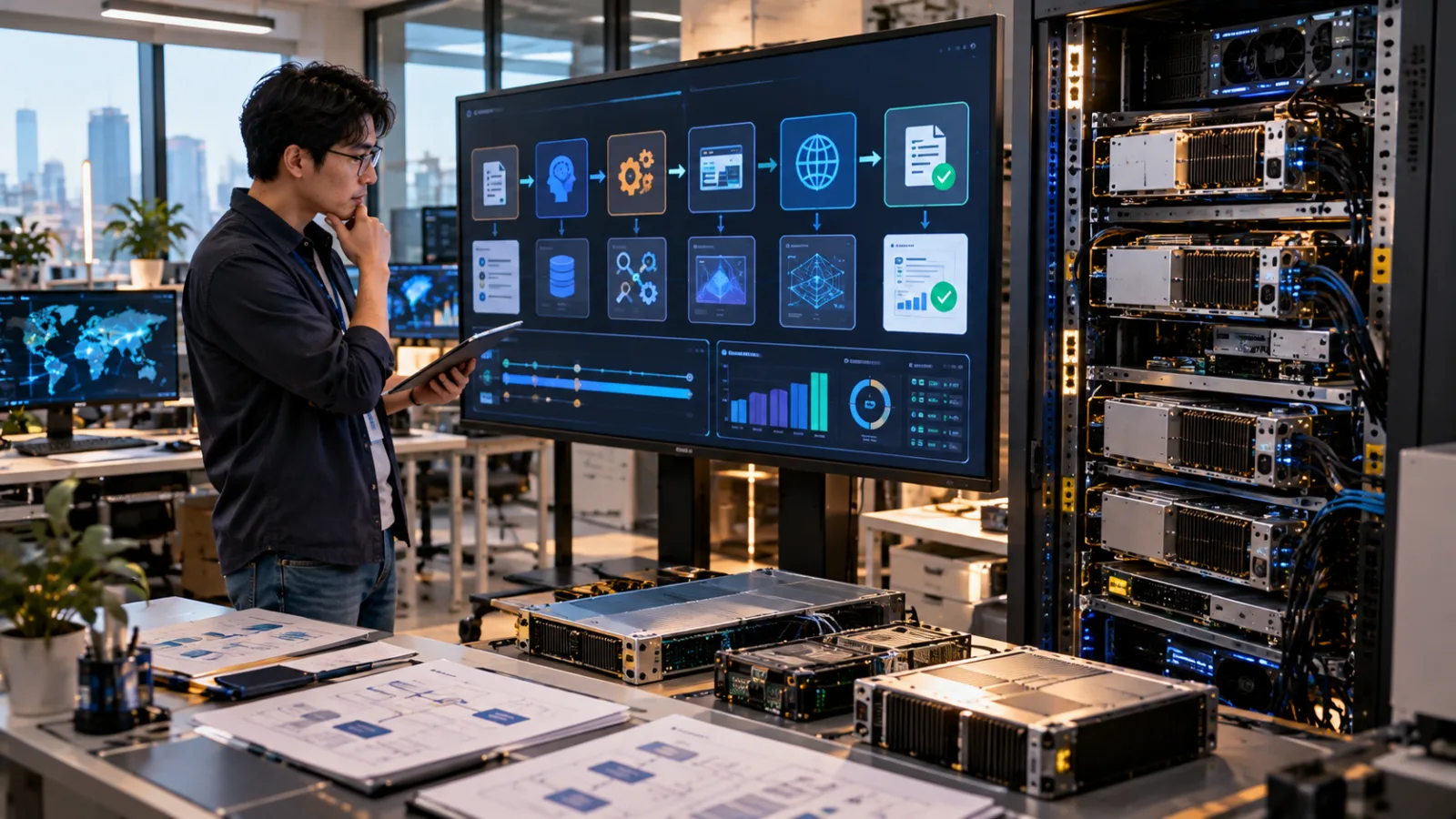
Today we focus on just two updates.
These two perfectly illustrate the two key layers of today's AI competition:
On top: how powerful can Agents become?
On the bottom: who can run these Agents at large scale with the lowest cost?
Meta has just released Muse Wonder and Muse Wonder Full.
On the other side, Microsoft officially announced Maia 300 and plans to deploy it at multi-gigawatt scale starting 2027.
The AI battlefield is evolving from “who has the strongest model” to:
Who can master models, Agents, chips, and data centers all at once?
1. Meta Launches Muse Wonder / Wonder Full: Next-Gen Muse Powered by Its Own Frontier Models
On October 12, Meta unveiled two new models:
Muse Wonder
and
Muse Wonder Full.
Meta describes them as the company's most capable models to date, designed not just for chat but for personal and professional agentic tasks.
Examples include:
Understanding leases,
Assisting with insurance claims,
Handling long-term work tasks,
Even building functional apps from scratch.
Muse Wonder is already accessible through Meta Model API and Muse Code.
Wonder Full is initially available to Muse Code subscribers.
More importantly:
Muse Wonder will become one of Muse’s core models.
Meta says Wonder will first roll out to Muse subscribers and then be integrated into broader Muse experiences.
This means that Meta is finally adding its own high-end models to the Muse ecosystem it has been building over the past month.
Meta’s Real Focus Goes Beyond Benchmarks
This year, Meta has incorporated Muse into:
Personal Agents,
Work Agents,
Coding,
Even workflows for small and medium businesses.
But to truly compete head-to-head with OpenAI, Anthropic, and Google, the crucial question has always been:
Are the underlying models strong enough?
Meta now claims Muse Wonder has reached frontier-level performance and, in some internal and public benchmarks, can compete with top-tier models like GPT-6 Astra and Claude Opus 5.5.
These remain mainly Meta’s own published results.
So, it’s too early to conclude from official benchmarks alone that Wonder has fully surpassed other frontier models.
What really matters is:
Once integrated into Muse,
will Wonder perform reliably in real long-term Agent tasks,
maintain context,
continue working,
use tools,
and not stray off course?
This is the difference typical users will truly notice.
This Highlights a Clear Layering in Meta’s AI Strategy
Back in August, Meta introduced Muse Glimmer, a very different path.
Glimmer is a 30B-parameter open-weight model designed to run locally on devices.
Muse Wonder and Wonder Full target cutting-edge capabilities.
In other words, Meta is working on:
Smaller models that run on more devices,
and
Larger models that elevate Agent capabilities.
In the future, Muse may not rely on a single model to handle everything.
Simple tasks can be assigned to cheaper, faster models.
When long context, multi-step operations, and complex reasoning are required, it switches to stronger models like Wonder.
This is essentially the structure emerging across the Agent market.
2. Microsoft Maia 300: Starting 2027, Proprietary Chips to Power Major AI Inference Systems
The other major update happens below the model layer.
On October 12, Microsoft officially announced its third-generation in-house AI chip:
Maia 300.
SasaDaily covered Maia 300 as early as August, when it was rumored as Microsoft’s upcoming next-gen self-developed chip.
Now, the specs and deployment plans are official.
Microsoft stated clearly:
Starting in 2027,
Azure Maia will move into multi-gigawatt deployments.
Maia 300 will become the primary AI inference system powering Microsoft products and services.
So, it’s not just an experimental chip.
In the future, Microsoft’s daily operation of:
Copilot,
Agents,
Coding tasks,
and various Azure AI services
will increasingly run on Microsoft-designed chips.
Why Not Just Keep Buying Nvidia Chips?
Because the biggest cost issue in AI is gradually shifting from:
“Can the model be built?”
to
“How much power, hardware, and money does each inference cost?”
Maia 300 is designed precisely to address this.
Microsoft says it’s optimized for:
Long-context reasoning,
Low-latency conversations,
Long-duration multi-step Agent tasks.
A full rack fits 96 accelerators.
Microsoft claims Maia 300 offers up to 7 times the token throughput of Maia 200 at full rack scale.
The company also states Maia 300 can produce about 40% more tokens per megawatt than “leading GPU-based systems.”
These numbers come from Microsoft’s own comparisons and do not specify which GPU systems were benchmarked.
So currently, the takeaway is Microsoft’s internal efficiency goal,
not independently verified claims of a 40% speed advantage over Nvidia.
Reuters: Microsoft Could Deploy Over 1 Million Maia 300 Chips
Reuters further reports Microsoft might deploy over 1 million Maia 300 chips next year.
If they reach this scale, it means more than just “Microsoft has an AI chip.”
It signals a real effort to reduce:
Azure’s,
Copilot’s,
Agent’s
single dependency on third-party GPUs.
The Maia 300 compute chiplet uses TSMC’s advanced 2nm process.
Microsoft designs the chip,
TSMC manufactures it,
and chip, memory, networking, racks, and data centers are optimized together.
This approach mirrors Google’s TPU and Amazon’s Trainium/Inferentia strategy:
Cloud companies don’t want to be Nvidia’s biggest customers forever.
They want control over how much an AI task ultimately costs.
These Two News Items Are Actually About the Same Thing
On the surface:
Meta is releasing new models.
Microsoft is releasing new chips.
But both companies are pursuing the same question:
If Agents are going to work daily for hundreds of millions, how do you make them powerful, reliable, and cost-effective?
Meta addresses the top layer:
Can Agents understand more complex tasks, remember longer, and complete more steps?
Microsoft addresses the bottom layer:
For the same Agent tasks, how to generate more tokens with less power and hardware cost?
So, future AI competition will increasingly be about more than just:
GPT’s score,
Claude’s score,
Gemini’s score.
What really determines whether a product scales broadly includes:
How long does a task take to run?
How much context is used?
How many model calls are needed?
How much energy does a million Agent tasks consume?
What’s the final operational cost?
Model capability is only one layer.
The real AI platform competition now extends from Agents down through chips and data centers.
Recommended Reading
This article explains how Muse differs from typical chat AI and the long-term tasks it can already handle, useful for understanding Wonder’s integration into Muse.
This traces Maia 300 from rumor stage in August to formal infrastructure strategy and deployment plans two months later.