This is a hypothetical case by SasaDaily. Processes and figures are estimates for demonstration; actual results vary by store and holiday.
Scenario: 3 Staff, 50 Messages on a Holiday
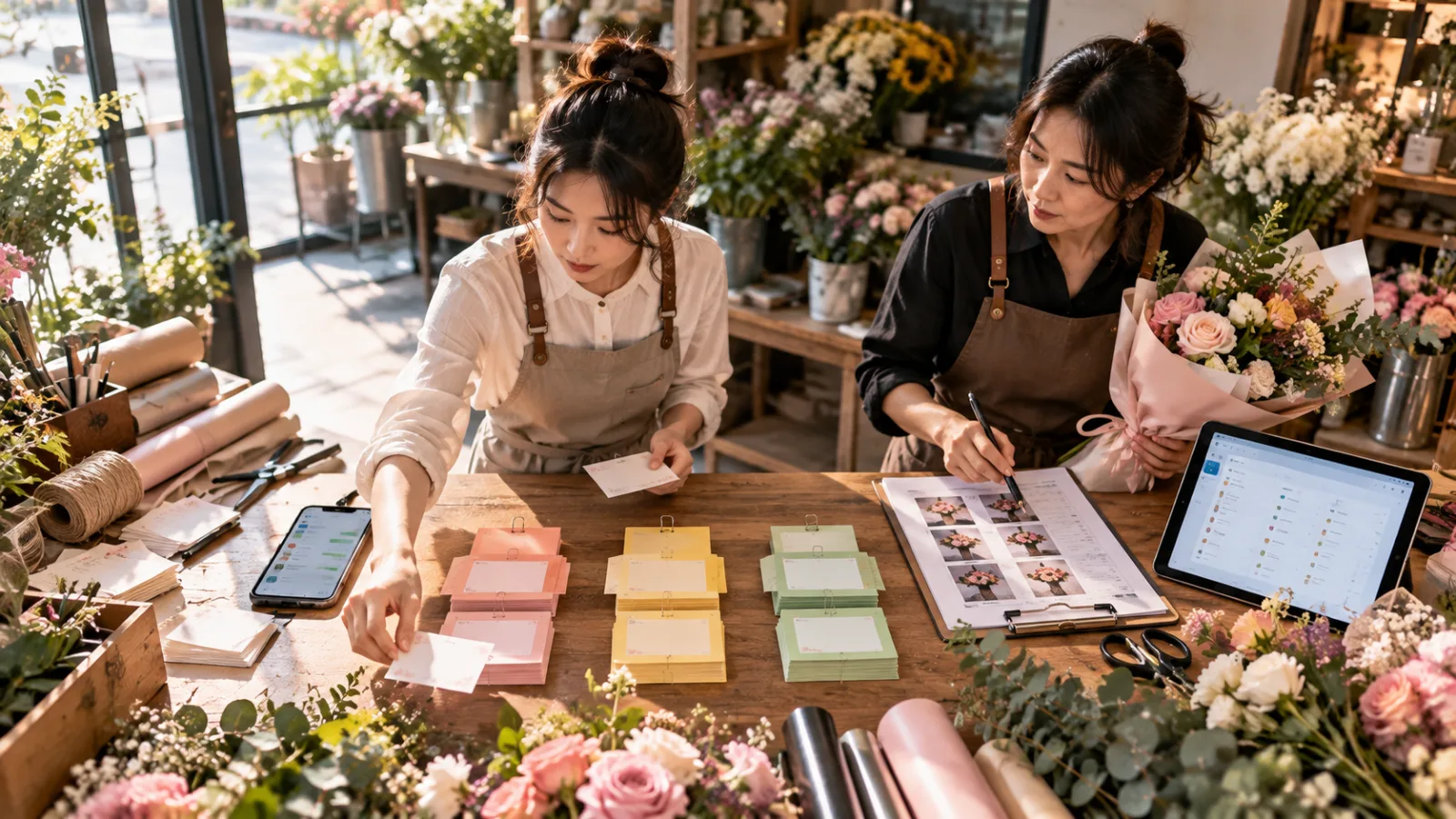
A local flower shop: owner (also handles purchasing and accounting), one florist, and one part-time worker (manages shop and replies). Normally about a dozen daily orders, a fairly relaxed pace.
However, during holidays like Halloween and Christmas, it’s a whole different story: 40–60 direct messages flood in daily. Customers often just say, “I want to order a bouquet,” which requires the part-timer to ask back five or six questions to understand who it’s for, the occasion, budget, and delivery date. The florist gets stuck answering questions, halting bouquet-making; the owner struggles too—stock orders are based on rough estimates, leading to leftover flowers that go to waste each year, the biggest source of loss.
Three Steps: Asking, Summarizing, Writing—Handled Separately
First Step: Q&A Templates—AI Clarifies Four Key Questions
The shop sets AI to ask a fixed set of ordering questions. When customers message, they immediately receive four questions:
- Who is the gift for? (Mom/partner/friend/client)
- What is the occasion? (Birthday/confession/opening/holiday)
- What is your budget range? (500/1000/2000)
- Which day and by what time should the delivery arrive?
Customers reply accordingly, providing all the info needed to place an order. The part-time worker only handles special cases not covered by the template, no longer having to figure out “what to ask next” each time.
Second Step: Stock Summary—AI Produces a Daily Table, Owner Decides Quantity
Before closing each day, AI compiles confirmed orders and pending inquiries into a single table: flower types, required dates, quantities, plus last year’s volume for reference. The owner can decide morning purchase additions by reviewing one table instead of digging through 50 messages.
Note: The table serves as a reference only; final purchasing decisions rely on the owner’s judgment of weather, price, and experience (explained later).
Third Step: Holiday Copywriting—AI Drafts, Humans Review and Post
Two weeks before the holiday, AI drafts Instagram stories and posts (bouquet intros, order reminders, last order countdowns). The florist selects preferred drafts, edits slightly, and posts—no need to write copy during the busiest time.
Numbers: Halving Q&A Time, Reducing Waste (Estimated)
Activity | Before | After Using Templates (Estimate)
Order Q&A Back and Forth | About 12 minutes | About 4 minutes
Daily Order Summary | Owner sifts through messages ~40 minutes | Reviews one table ~10 minutes
Holiday Flower Waste Rate | About 15% | About 8%
Copywriting Time | Florist creates on the spot ~30 minutes per item | Revises drafts ~10 minutes per item
Saved time goes back to bouquet-making and shop care—the florist’s hands are most valuable during peak times.
Two Decisions Still Made by Humans
Order Quantities and Suppliers: Flowers are fresh products with prices fluctuating daily due to weather and auctions; quality must be checked in person. AI’s table helps estimate “how much will definitely be needed,” but “how much extra to gamble on” depends on the owner’s experience and risk assessment; the template can’t decide this.
Tone for Special Occasions: Orders for confessions, apologies, funeral condolences require delicate wording. These customers are handled personally, not through templates—the flower shop sells more than flowers, it sells the atmosphere of the occasion.